Liquidity in Crypto: The Lifeblood of Markets in 2025
Liquidity in Crypto: The Lifeblood of Markets in 2025
A Comprehensive Guide to Understanding, Analyzing, and Navigating Crypto Market Liquidity
Table of Contents
What Is Liquidity in Crypto?

Understanding liquidity metrics is crucial for successful crypto trading
Liquidity in cryptocurrency markets represents the degree to which digital assets can be bought or sold quickly in the market without causing significant price fluctuations. High liquidity environments are characterized by tight bid-ask spreads, substantial trading volumes, and rapid transaction execution capabilities. Conversely, low liquidity scenarios often result in substantial price slippage, execution delays, and increased trading costs. As we progress through 2025, with Bitcoin reaching unprecedented heights above $100,000 and the global cryptocurrency market capitalization surpassing $3 trillion, liquidity considerations have become paramount for both institutional and retail market participants.
The unique decentralized nature of cryptocurrency markets creates substantial liquidity variations across different trading venues, asset classes, and market conditions. Major cryptocurrencies like Bitcoin on premier exchanges such as Binance demonstrate exceptional liquidity metrics, while emerging altcoins on smaller decentralized exchanges frequently encounter liquidity constraints that significantly impact trading efficiency and price discovery mechanisms.
Understanding liquidity dynamics requires examining multiple dimensions including market depth, order book composition, trading volume distributions, and cross-exchange liquidity correlations. Advanced traders and institutional investors employ sophisticated liquidity analysis tools to identify optimal entry and exit points while minimizing market impact costs.
Recent market developments have highlighted the critical importance of liquidity management. The emergence of sophisticated algorithmic trading strategies, the proliferation of institutional-grade trading infrastructure, and the increasing integration of traditional financial market participants have all contributed to evolving liquidity dynamics that market participants must navigate strategically.
Importance of Liquidity in Crypto
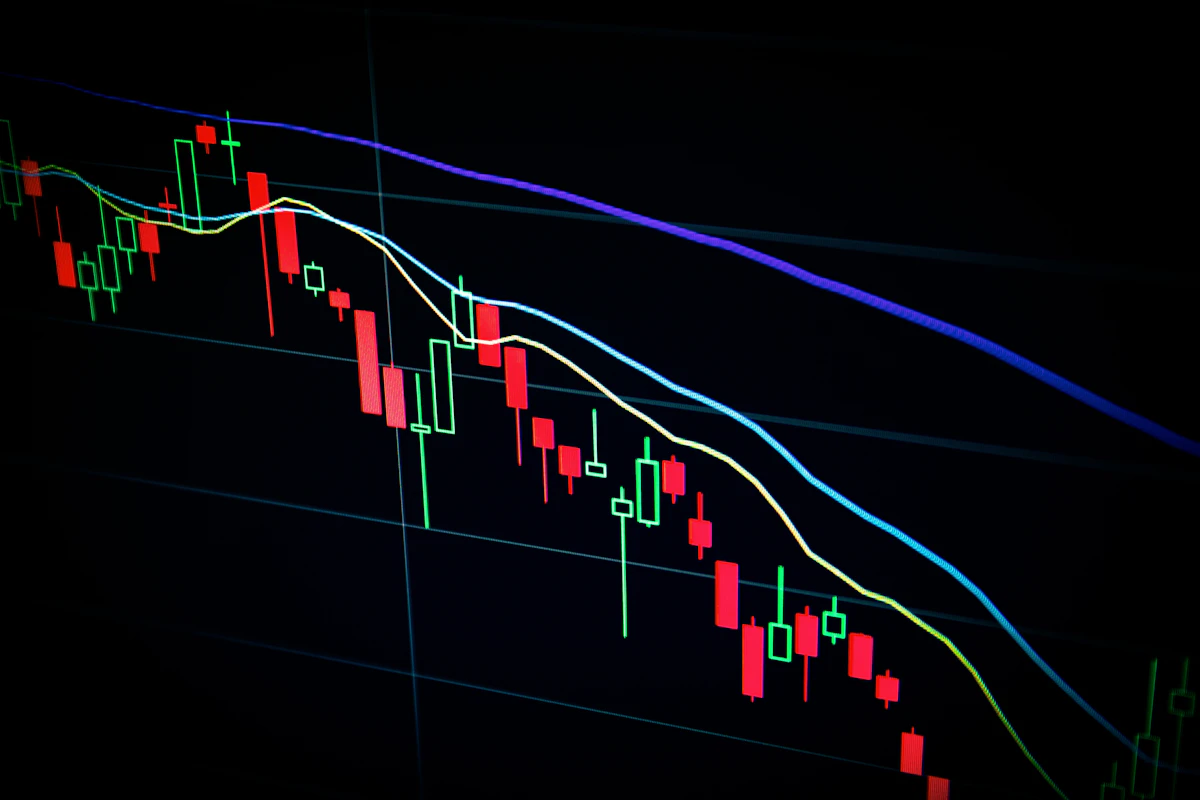
Professional traders closely monitor liquidity indicators for optimal execution
Liquidity represents a cornerstone element of robust cryptocurrency market ecosystems, delivering multiple critical benefits that collectively enhance market efficiency and participant experience. The multidimensional importance of liquidity manifests through several interconnected mechanisms that fundamentally shape market behavior and investment outcomes.
Primary Benefits of High Liquidity
- Enhanced Price Stability: High liquidity environments substantially mitigate volatility induced by large-volume transactions, ensuring more consistent and predictable pricing mechanisms that benefit all market participants through reduced execution uncertainty.
- Optimal Trading Efficiency: Liquidity facilitates rapid execution of buy and sell orders with minimal latency, enabling traders to capitalize on market opportunities while maintaining precise control over execution parameters and timing.
- Increased Market Confidence: Liquid markets naturally attract institutional investors and sophisticated market participants who require reliable execution capabilities for substantial position sizes, thereby contributing to market depth expansion and ecosystem development.
- Accelerated Adoption Trajectories: Robust liquidity facilitates cryptocurrency utilization as viable mediums of exchange, supporting broader mainstream adoption through enhanced usability and reduced transactional friction across diverse use cases.
- Arbitrage Opportunity Generation: High liquidity conditions enable sophisticated traders to systematically exploit minor price discrepancies across different trading venues, contributing to market efficiency through continuous price discovery and correction mechanisms.
The practical implications of liquidity become particularly evident when examining execution scenarios across different asset classes. Ethereum's substantial liquidity on established exchanges like Kraken enables execution of multimillion-dollar orders with minimal price impact, contrasting sharply with execution challenges encountered when trading emerging altcoins with constrained liquidity profiles.
Beyond execution considerations, liquidity fundamentally influences market structure dynamics including spread formation, volatility patterns, and information dissemination mechanisms that collectively determine market quality metrics and participant experience outcomes across diverse trading environments.
Factors Affecting Liquidity

Multiple interconnected factors determine crypto market liquidity dynamics
Cryptocurrency market liquidity represents a complex multivariate phenomenon influenced by numerous interconnected factors that collectively determine market depth, execution quality, and price stability characteristics. Understanding these liquidity determinants enables market participants to make informed trading decisions and develop robust risk management frameworks.
Key Liquidity Determinants
- Trading Volume Dynamics: Daily trading volumes on major exchanges serve as primary liquidity indicators, with platforms like Coinbase demonstrating consistently high volumes that support liquid trading environments across major cryptocurrency pairs and market conditions.
- Order Book Composition: Market depth characterized by substantial buy and sell orders distributed across multiple price levels provides resilience against large transaction impacts and supports stable execution environments during volatile market phases.
- Exchange Infrastructure Quality: Centralized exchanges typically offer superior liquidity metrics compared to decentralized alternatives, though this gap continues narrowing as DeFi infrastructure evolves and liquidity aggregation mechanisms become increasingly sophisticated.
- Token Adoption Characteristics: Widely adopted cryptocurrencies naturally develop deeper liquidity profiles through network effects, community engagement, and institutional acceptance that collectively enhance trading ecosystem robustness.
- Regulatory Environment Impact: Policy developments including tariff implementations, securities classifications, and compliance requirements significantly influence liquidity distribution patterns and market participation dynamics across different jurisdictions.
- Market Maker Participation: Professional market makers provide continuous liquidity through algorithmic quoting strategies that enhance market depth and reduce execution costs for all participants while earning spreads for their services.
The interconnected nature of these factors creates complex liquidity ecosystems where changes in one dimension frequently propagate across multiple market segments. Regulatory developments exemplify this interconnectedness, where policy announcements can trigger substantial liquidity redistribution across exchanges, asset classes, and geographic regions almost instantaneously.
Market participants must develop comprehensive liquidity assessment frameworks incorporating both quantitative metrics and qualitative factors to navigate evolving market conditions effectively. Advanced analytical approaches combine traditional metrics with blockchain-specific indicators including on-chain transaction volumes, wallet concentration statistics, and cross-chain liquidity flows.
Emerging technologies including cross-chain interoperability protocols, layer-2 scaling solutions, and institutional-grade trading infrastructure continue reshaping liquidity dynamics, creating both challenges and opportunities for market participants navigating increasingly sophisticated cryptocurrency ecosystems.
Challenges of Low Liquidity

Low liquidity environments create significant challenges for market participants
Illiquid cryptocurrency markets present substantial obstacles for traders, investors, and ecosystem participants through multiple interconnected challenges that collectively degrade market quality and increase operational risks. Understanding these liquidity constraints enables development of appropriate risk mitigation strategies and informed participation decisions across different market conditions.
Primary Low-Liquidity Challenges
- Substantial Price Slippage: Large orders in illiquid markets frequently trigger disproportionate price movements, where even moderately sized transactions can generate 5-10% price impacts that significantly erode execution efficiency and profitability margins.
- Increased Transaction Costs: Wider bid-ask spreads characteristic of low-liquidity environments directly increase trading expenses, reducing net returns and creating economic barriers for frequent trading strategies and arbitrage operations.
- Market Manipulation Vulnerability: Illiquid markets exhibit heightened susceptibility to manipulation schemes including pump-and-dump operations, spoofing activities, and coordinated price movements that distort genuine price discovery mechanisms.
- Restricted Market Access: Limited liquidity naturally reduces market accessibility for both retail and institutional participants, constraining capital allocation options and portfolio diversification capabilities across the digital asset spectrum.
- Elevated Exit Risks: Investors frequently encounter difficulties liquidating positions during market downturns or volatility spikes, potentially resulting in capital lock-up situations and forced holding periods that conflict with investment objectives.
- Information Asymmetry Amplification:
- Information Asymmetry Amplification: Low liquidity environments typically feature reduced transparency and information efficiency, creating advantageous conditions for informed participants while disadvantaging general market participants through asymmetric information distribution.
The challenges associated with low liquidity extend beyond immediate execution concerns to encompass broader market structure implications. Market fragmentation, reduced price discovery efficiency, and impaired capital formation mechanisms collectively degrade overall market quality while increasing systemic risks across interconnected financial ecosystems.
Recent market evolution has witnessed sophisticated approaches to liquidity enhancement including automated market maker innovations, cross-venue liquidity aggregation solutions, and institutional liquidity provision programs that collectively address traditional liquidity constraints while creating new market dynamics that participants must understand and navigate effectively.
CEX vs. DEX Liquidity Comparison

CEX and DEX platforms offer distinct liquidity characteristics and trading experiences
Centralized and decentralized cryptocurrency exchanges represent fundamentally different liquidity provision models with distinct characteristics, advantages, and limitations that collectively shape market structure and participant experience. Understanding these differences enables informed platform selection and trading strategy development aligned with specific objectives and risk tolerance parameters.
| Exchange Type | Primary Examples | Liquidity Characteristics | Security Model | Optimal Use Cases | Typical User Experience |
|---|---|---|---|---|---|
| Centralized Exchanges (CEX) | Binance, Coinbase, Kraken | High liquidity across major pairs, institutional-grade depth, professional market making | Custodial model with regulatory compliance, insurance protections, traditional security measures | Large volume trading, institutional participation, algorithmic strategies, arbitrage operations | User-friendly interfaces, advanced trading tools, comprehensive customer support, regulatory oversight |
| Decentralized Exchanges (DEX) | Uniswap, SushiSwap, Curve Finance | Variable liquidity depending on pool composition, emerging institutional participation, protocol-driven dynamics | Non-custodial architecture, smart contract security, user-controlled assets, transparency focus | DeFi ecosystem participation, emerging token trading, cross-chain operations, yield generation strategies | Wallet integration requirements, gas fee considerations, protocol-specific learning curves, community-driven development |
This comparative analysis reveals CEX dominance in traditional high-volume trading scenarios while highlighting DEX advantages in specific decentralized finance applications and emerging asset classes. The evolving landscape continues witnessing convergence trends where CEX platforms integrate DeFi features while DEX protocols enhance traditional exchange functionality through layer-2 solutions and institutional-grade infrastructure.
Emerging Hybrid Models
The cryptocurrency exchange ecosystem increasingly features hybrid models combining centralized efficiency with decentralized security principles. These innovative platforms leverage advanced technologies including zero-knowledge proofs, cross-chain interoperability protocols, and sophisticated order matching algorithms to deliver enhanced user experiences while maintaining core decentralization principles.
Market participants should consider multiple factors when selecting trading venues including liquidity requirements, security preferences, regulatory considerations, and specific asset class characteristics. Diversification across exchange types frequently provides optimal balance between execution efficiency, security robustness, and ecosystem participation opportunities.
Liquidity Trends in 2025

Emerging trends continue reshaping cryptocurrency liquidity dynamics
The cryptocurrency liquidity landscape continues evolving rapidly through multiple interconnected trends that collectively redefine market structure, participant behavior, and ecosystem development pathways. Understanding these evolving dynamics enables forward-looking strategy development and informed participation decisions aligned with emerging market realities.
Primary Market Evolution Trends
- Institutional Capital Inflows: Traditional financial institutions including asset management firms, hedge funds, and corporate treasuries continue expanding cryptocurrency allocations, substantially enhancing market liquidity through professional trading operations and sophisticated market making activities.
- DeFi Liquidity Innovation: Decentralized finance protocols continue evolving liquidity provision mechanisms through automated market maker enhancements, cross-chain liquidity aggregation, and sophisticated yield optimization strategies that collectively expand accessible liquidity across diverse market segments.
- Bitcoin Market Maturation: Bitcoin's ongoing price appreciation and institutional adoption continue attracting substantial capital inflows that enhance overall market liquidity while supporting derivative market development and sophisticated trading instrument proliferation.
- Regulatory Framework Evolution: Progressive regulatory developments across major jurisdictions increasingly provide clarity and certainty that supports institutional participation while potentially constraining certain market segments through compliance requirements and operational standards.
- Cross-Chain Interoperability Advancements: Technological innovations including bridging protocols, atomic swap mechanisms, and interoperability standards continue reducing fragmentation while enhancing liquidity portability across diverse blockchain ecosystems and asset classes.
- Layer-2 Scaling Implementation: Advanced scaling solutions substantially enhance transaction throughput while reducing costs, supporting increased trading activity and sophisticated financial instrument implementation that collectively contribute to liquidity expansion.
These evolving trends collectively contribute to increasingly sophisticated and interconnected cryptocurrency markets where liquidity flows seamlessly across venues, asset classes, and geographic regions. Market participants must continuously update analytical frameworks and operational approaches to effectively navigate this dynamic landscape while capitalizing on emerging opportunities.
The convergence of traditional financial market practices with blockchain-native innovations continues creating novel liquidity provision models and trading mechanisms that redefine market participation possibilities while introducing new complexity dimensions that require dedicated understanding and strategic adaptation.
How to Manage Liquidity in Crypto
Effective liquidity management requires comprehensive strategies and disciplined execution
Optimizing cryptocurrency trading and investment outcomes requires systematic liquidity management approaches incorporating both proactive strategies and reactive adaptations to evolving market conditions. These methodologies collectively enhance execution efficiency, reduce transaction costs, and improve overall portfolio performance across diverse market environments.
Comprehensive Liquidity Management Framework
- Strategic Exchange Selection: Prioritize trading venues demonstrating robust liquidity metrics, transparent operations, and institutional-grade infrastructure that collectively support efficient execution across intended transaction sizes and asset classes while maintaining appropriate security standards.
- Advanced Order Type Utilization: Implement sophisticated order types including limit orders, iceberg orders, and time-weighted average price algorithms that systematically manage market impact while optimizing execution outcomes across different volatility regimes and liquidity conditions.
- Active Liquidity Provision Participation: Engage in professional market making activities or decentralized finance liquidity provision programs that generate yield through spread capture while contributing to overall market depth and ecosystem development.
- Comprehensive Metric Monitoring: Establish systematic tracking of key liquidity indicators including bid-ask spreads, order book depth distributions, trading volume patterns, and market impact measurements that inform real-time trading decisions and strategic adjustments.
- Strategic Portfolio Diversification: Maintain balanced allocations across liquidity tiers and asset classes that collectively optimize risk-adjusted returns while ensuring appropriate exit flexibility across different market conditions and time horizons.
- Cross-Venue Execution Optimization: Implement smart order routing strategies that systematically identify optimal execution venues based on real-time liquidity conditions, fee structures, and security considerations across interconnected market ecosystems.
- Risk Management Integration: Incorporate liquidity risk assessments into comprehensive risk management frameworks that address potential execution challenges, position liquidation constraints, and market impact considerations across diverse scenarios.
These strategic approaches collectively enhance trading outcomes while reducing operational risks associated with liquidity constraints. Market participants should regularly review and adjust their liquidity management methodologies based on evolving market conditions, technological advancements, and personal experience accumulation.
The increasing sophistication of cryptocurrency markets continues creating new liquidity management tools and analytical approaches that enable more precise execution control and enhanced market participation outcomes. Continuous learning and adaptation remain essential for effectively navigating this dynamic landscape while capitalizing on emerging opportunities.
Frequently Asked Questions
Why is liquidity critically important in cryptocurrency markets?
Liquidity fundamentally enables efficient market operations through multiple mechanisms including price stability enhancement, execution efficiency improvement, institutional participation facilitation, and overall market confidence development. High liquidity environments support sophisticated trading strategies, reduce transaction costs, and contribute to market maturation through professional infrastructure development and participant diversity expansion.
What methodologies effectively assess cryptocurrency liquidity?
Comprehensive liquidity assessment incorporates multiple quantitative metrics and qualitative factors including trading volume analysis, order book depth evaluation, bid-ask spread measurement, price impact modeling, and cross-exchange correlation analysis. Advanced approaches additionally consider blockchain-specific indicators including on-chain transaction patterns, wallet concentration statistics, and protocol development activities that collectively inform liquidity understanding across different market segments.
How do decentralized exchanges compare to centralized platforms regarding liquidity?
Decentralized exchanges typically demonstrate more variable liquidity characteristics dependent on specific protocol implementations, community participation levels, and technological developments. While centralized exchanges generally maintain superior liquidity for established assets, decentralized platforms increasingly compete through innovative mechanisms including automated market maker enhancements, cross-chain interoperability solutions, and institutional-grade infrastructure development that collectively narrow traditional liquidity gaps across different market segments.
What specific risks emerge from low-liquidity cryptocurrency trading?
Illiquid trading environments introduce multiple interconnected risks including substantial price slippage, increased transaction costs, market manipulation vulnerability, restricted exit flexibility, information asymmetry amplification, and overall market quality degradation. These risks collectively impact trading outcomes, portfolio management effectiveness, and long-term investment sustainability across different market conditions and participation strategies.
Which emerging trends most significantly impact cryptocurrency liquidity development?
Multiple evolving trends collectively reshape cryptocurrency liquidity dynamics including institutional capital inflows, decentralized finance innovation, regulatory framework evolution, cross-chain interoperability advancement, layer-2 scaling implementation, and market structure sophistication. These developments continuously redefine liquidity provision mechanisms, trading infrastructure capabilities, and participant experience characteristics across increasingly interconnected and sophisticated digital asset ecosystems.
How can individual investors effectively navigate liquidity considerations?
Individual market participants can systematically address liquidity considerations through strategic exchange selection, appropriate order type utilization, comprehensive metric monitoring, portfolio diversification implementation, continuous education engagement, and disciplined risk management practices. Developing systematic approaches and maintaining flexibility enables effective navigation of evolving liquidity landscapes while capitalizing on emerging opportunities across diverse market conditions.


Komentar
Posting Komentar